When people ask whether they need Passivhaus-certified windows, they’re usually asking about a label. But there's a more fundamental question worth exploring first: what are Passive House windows actually designed to achieve – and does your project need those outcomes?

In summary: Passivhaus (Passive House) windows are engineered to maintain stable internal surface temperatures, eliminate radiant discomfort and reduce reliance on mechanical heating – not simply to meet a U-value threshold. Certification verifies this performance, but the underlying physics applies whether or not a project is formally certified.

Key principles

  • Comfort is driven by internal surface temperature, not nominal U-value alone.
  • Radiant asymmetry and condensation risk are controlled through high-performance glazing and careful detailing.
  • Better windows can simplify heating systems and reduce emitter counts.
  • Summer performance depends on correct g-value and solar control, not insulation alone.
  • Installation quality determines whether specified performance is realised in practice.

The practical differences between glazing standards are often obscured by specification sheets. This comparison focuses on what each level of performance means for the building and its occupants – not just the window itself.

Standard double glazingPart L compliant High-performance triple glazingExceeds Part L Passivhaus-level glazingMeets PHI component criteria
Typical whole-window U-value 1.2–1.6 W/m²K 0.64–0.94 W/m²K ≤0.8 W/m²KPHI-certified product value; installed performance depends on junction detailing
Internal surface temperatureAt –5°C external, 21°C internal ~12–14°C ~16–18°C ≥17°C (PHI threshold)
Radiant comfort Perceptible chill near glazing; downdraught likely Significantly reduced; minimal downdraught Asymmetry ≤4.2K; no perceptible discomfort
Condensation risk Moderate to high at frame and glass edge Low with warm-edge spacers Controlled by fRsi ≥0.7 requirement
Certification requirement Not eligible Not certified Required for full Passivhaus projects
Heating system impact Perimeter radiators typically required Reduced emitter sizing possible Perimeter heating often eliminated in well-detailed builds
Summer performance Limited solar control options g-value balancing possible with coating selection g-value optimised within certified thermal model
Installation sensitivity Standard tolerances Moderate – thermal bridging at junctions reduces benefit Critical – Psi-install values and junction detailing determine real performance
Typical cost premiumvs standard double glazing Baseline +15–30% +25–45% typicalHigher for premium frame systems
Long-term value Energy compliance Comfort + future-proofing Comfort stability + system simplification + certification assurance
Best suited for Budget renovations; Part L compliance Performance-focused new builds and renovations; future-proofing Certified Passivhaus; ultra-low-energy builds; condensation-critical environments
Values are indicative and depend on frame material, glazing specification and installation quality. Internal surface temperatures calculated using PHI comfort criteria methodology for typical UK winter conditions. Cost premiums reflect industry-typical ranges and vary by supplier, frame material and certification route. For project-specific guidance, speak to our team.

The rest of this article explores how those principles translate into real design decisions.

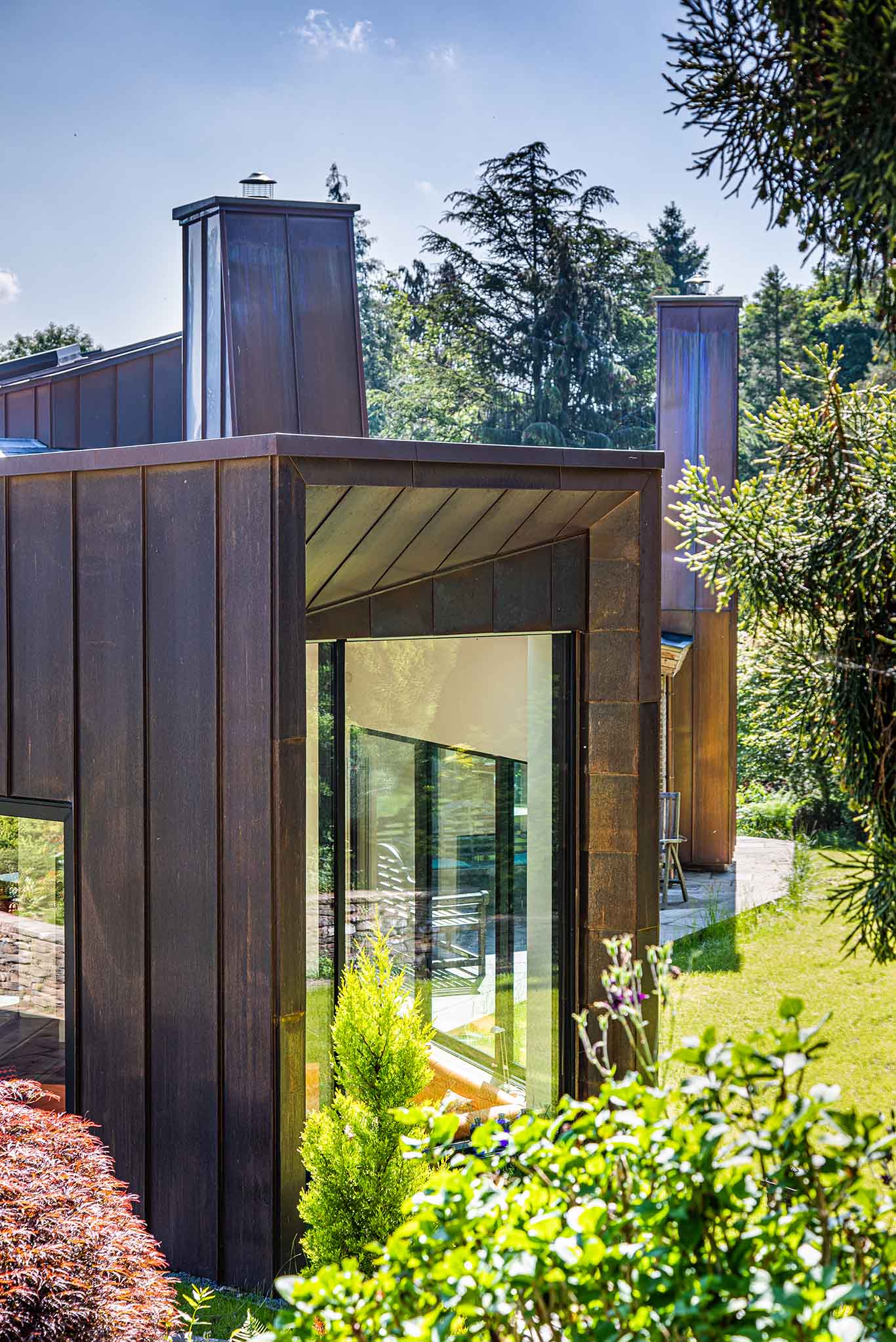
Triple-glazed window with a view of green trees, modern interior design.

The problem Passivhaus windows were designed to solve

Conventional glazing creates cold internal surfaces, radiant asymmetry (the chill you feel when a nearby surface is significantly colder than the room) and downdraught – causing discomfort and mechanical complexity.


The Passivhaus Institute's component criteria address this directly. Passivhaus windows are not defined by a badge, but by:

  • Stable internal surface temperatures: Windows must maintain an internal surface temperature above 17°C and achieve a temperature factor (fRsi) of at least 0.7 to prevent condensation and mould growth
  • Reduced radiant discomfort: radiant temperature asymmetry must not exceed 4.2K
  • Reduced system dependency: lower heat demand enabling simpler heating, fewer emitters and less M&E complexity
  • Climate resilience: internal environments unaffected by climate shocks and increasing average temperatures
  • Long-term performance integrity: durable building fabric designed to last decades


These are comfort and hygiene thresholds, grounded in ISO 13788 and DIN 4108-2 standards, not arbitrary performance targets.

Certification verifies that these thresholds are met. Design intent is what actually creates the conditions for long-term comfort and resilience.

What metrics matter in Passive House windows?

Why surface temperature is key

If Passive House windows are designed for comfort and building physics, what metric actually captures it?
U-values are important, but they are a means to an end - not an indicator of how a room feels.

A room heated to 21°C can still feel cold if internal glass temperatures drop below ~16°C. Your body radiates heat toward the colder glass, creating a chill that raising the thermostat won't resolve – because the problem is the surface temperature of the window, not the air temperature in the room.

This is why the PHI's comfort criterion focuses on limiting radiant asymmetry, and why well-specified triple glazed windows with whole-window U-values below 0.8 W/m²K make such a tangible difference to how a room feels.

In the UK’s cool-temperate climate, full Passivhaus certification typically requires the installed window – including frame, glazing and junction performance – to achieve around 0.85 W/m²K or better.

In practice, product performance must be stronger than this to compensate for installation losses.

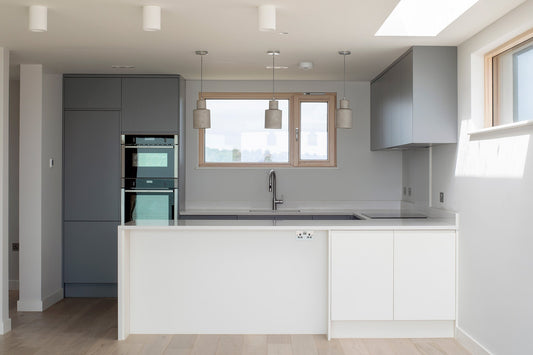
Front elevation view of triple-glazed features in a passive house school.

How do Passive House windows influence the wider building?

Simplifying the building, not just the window

When windows no longer create cold zones and downdraught, an architectural consequence follows: perimeter radiators can often be reduced or eliminated.

In well-executed projects, stronger envelope performance reduces peak heat demand, enabling smaller plant, simpler heat distribution and more flexible interior layouts.

At Two Rivers Primary School in Somerset – the UK's first Passivhaus Plus school using traditional construction – the building achieved 0.4 ACH, well within the 0.6 ACH Passivhaus limit. The MEP design maintains a stable 20°C base temperature using triple-glazed windows, air source heat pumps and underfloor heating.

For architects and M&E consultants, this reframes the value conversation.

Investing in the thermal envelope is not over-specification – it is often a smarter allocation of build budget, particularly when it reduces heating system size and lifetime operating costs.

For homeowners and self-builders, the benefit is tangible: simpler interiors, lower long-term servicing costs and cleaner elevations without radiators beneath every window.

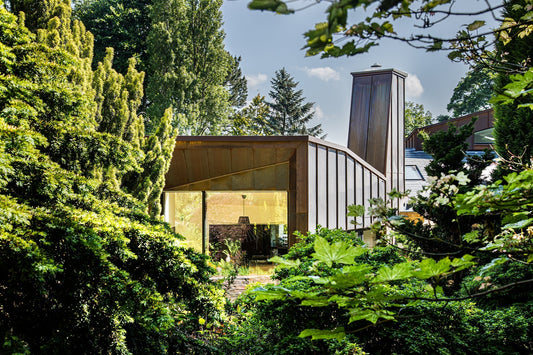
Modern house exterior with triple-glazed glass door and metal facade, surrounded by greenery.

Do Passive Houses overheat in summer?

Year-round performance beyond heating season

Solar gain (g-value), overheating risk and UK Part O compliance are now integral to responsible window specification.

Balancing insulation performance with appropriate solar control is essential – particularly on east and west elevations where low-angle summer sun presents the greatest overheating risk.

“[Large glazed areas] risk creating huge temperature fluctuations depending on the season... and triple-glazing [combined with appropriate solar control coatings] is a fundamental part of this temperature regulation – limiting excess warmth in summer, as well as retaining it in winter.”

Howard Evans, Chiles + Care Architects, Ravine House (RIBA Award Winner & Featured on Grand Designs)

In the UK's temperate climate, the case for Passivhaus-level glazing increasingly rests on comfort stability and condensation resilience rather than headline energy savings – eliminating cold surfaces and the mechanical complexity that follows from them, not simply reducing heating bills.

Well-specified passive house windows should be understood as year-round performance components, designed for climate variability rather than a single heating season.

Which products are right for your project?

Take our short survey to discover the window and doors that differentiate developments.

Can window installation compromise Passive House performance?

Where design intent succeeds or fails

Even the highest-rated window will underperform if it is installed without attention to junction detailing.

Psi-install values (thermal bridging heat loss at junctions), airtightness continuity at the frame-to-wall interface, and thermal bridge management at reveals and sills are where specified performance either materialises or doesn't.

Each depends on deliberate detailing: the right sealants and tapes for airtightness, the correct window placement within the reveal, and sufficient insulation depth at every junction.

This is precisely why the importance of installation cannot be separated from product specification. Responsibility for junction detailing should be identified and agreed at the earliest stage of the project – not discovered as an ambiguity on site.

A supplier who raises this conversation proactively is one who understands that their product's reputation depends on how it's installed, not just how it's manufactured.

Does Passive House certification matter?

When it’s valuable, and when the principles matter more

This does not diminish the value of certification itself.

When a project is pursuing full Passivhaus compliance, when PHPP modelling requires certified component data, or when third-party verification is essential for risk management, certified products are the appropriate choice (the Passivhaus Trust directory lists verified suppliers and consultants).

But certification is a verification mechanism, not the objective: comfort is.

For the many projects that aren't pursuing formal certification – including retrofits, Part L-compliant new builds and performance-focused renovations – the physics still applies. In retrofit projects, improving window surface temperature alone can significantly reduce condensation risk without full Passivhaus compliance.

Stable internal surface temperatures, reduced radiant discomfort, lower system dependency and long-term airtight integrity matter just as much whether or not a certificate is issued at the end.

We design and install windows to deliver the comfort, resilience and system simplicity that the Passive House standard was created to achieve – whether or not the building is formally certified.

Unmistakably trusted.

The highest compliment is a recommendation. These are the voices of those who placed their trust in us.

"Excellent Company from start to finish… If only every window supplier operated like this! I have used many others over the years on various projects but Norrsken far exceeded all of them… I hope this helps you make a decision for what is probably a large chunk of your budget… They are totally worth it"

See more

Angela Smith

Self Builder

“Having used Norrsken in the past we were happy to recommend them to one of our clients who was looking for the best sound proofing and weatherproofing they could get being set on a hill top overlooking the sea and facing strong westerly winds. They were not disappointed. A quality product, delivered well and on time. Thankyou.”

See more

Ken Pearson

Homeowner

"Fantastic professional service, from the original design to the final installation. The triple-glazed windows and doors that have been fitted to our new house are of a very high quality and look amazing. We definitely made the right choice when we decided to use Norrsken, nothing is too much trouble for them."

See more

Nigel

Homeowner

"I did my research before contacting Norrsken but they had come highly recommended by our Architect for our Passive House self build.

From the first meeting with Nick we felt confident that they were the Company for us."

See more

Ali and Brian Manning

Passive House Self Builders

“The quality of the triple glazed, alu-clad windows and doors is superb. They feel so reassuringly solid ... I opted for a wood stain for the internal finish on the frames, and am so glad I did, as it shows off the beauty of the wood perfectly. The whole process from order to installation went smoothly. I thoroughly recommend Norrsken.”

See more

Gareth

Homeowner

"Norrsken provided attentive service from drawings to on-site installation for our project at National Trust Stourhead and we would definitely recommend and repeat commission them on future projects."

See more

Charlotte Hill-Baldwin

Architect, H-B Designs

“From our very first interaction to the aftercare support, Norrsken has been exceptional. The quality of their windows is outstanding - beautifully designed, expertly crafted, and a real standout feature in our home. They've truly elevated the overall look and feel of the house.”

See more

Neil Southwell

Self Builder Homeowner