
A guide for UK self-builders
If you're planning a Passive House (or near-Passive) self-build, the glazing question will likely surface early. By the time you've spoken to a few architects and suppliers, it can feel like one of the more expensive, complicated corners of a project that already has plenty of both.
The short answer is that triple glazing is practically unavoidable for Passive House - but the premium, and the complexity, can be smaller than most self-builders expect.
Key takeaways
- Passive House (Passivhaus) specifies performance thresholds, not pane count, but those thresholds make triple glazing practically unavoidable in UK conditions
- The recommended whole-window U-value threshold for component-level compliance is ≤0.80 W/m²K; your installed target is ≤0.85 W/m²K
- The cost gap between well-specified Future Homes Standard-compliant glazing and Passive House-capable triple glazing is driven by identifiable factors. Most of Norrsken's triple-glazed range qualifies for Passive House use, so the uplift is often smaller than self-builders expect.
- PHI-certified windows are one route to Passive House compliance, not the only one
-
Frame material choice - uPVC, all-timber, or aluminium-clad timber - affects performance, longevity, cost, and design character across the building's lifetime
Does Passive House require triple glazing?
In practice, yes. The Passive House standard mandates a space heating demand of ≤15 kWh/m²/yr and airtightness of ≤0.6 ACH50.
At component level, the passive House Institute (PHI) recommends a whole-window U-value (Uw) of ≤0.80 W/m²K depending on climate zone. Triple glazing is the only realistic route to that Uw threshold for most UK builds. High-specification double-glazed units typically achieve around 1.2 W/m²K at best; Norrsken's triple glazed windows reach as low as 0.64 W/m²K.
If you're not building a certified Passive House, or still deciding whether triple glazing is right for your project type more broadly, our use-case guide for UK projects covers the decision across new builds, retrofits, and extensions.
How does the Future Homes Standard compare to Passivhaus glazing requirements?
The Future Homes Standard (FHS) sets a notional whole-window Uw of 1.2 W/m²K for new builds - 1.4 W/m²K for refurbishments - with a limiting value of 1.6 W/m²K, although this backstop is expected to tighten. This allows designers to offset lower-performing glazing through other elements of the fabric.
Since U-values are linearly proportional to heat loss, a window specified to the FHS limiting value (1.6 W/m²K) loses heat at double rate of a Passive House-compliant window at 0.8 W/m²K, with otherwise identical specification.
What drives the cost of Passive House triple glazing?
The main cost variables are:
- frame material, where aluminium-clad timber carries a premium over all-timber, and uPVC sits at the lower end of upfront cost but differs in longevity and design character
- gas fill, where krypton outperforms argon per millimetre of cavity depth but costs more - argon is standard in most Passive House-capable units, including those manufactured by Norrsken;
- certification overhead, which reflects the Passive House Institute's testing and verification process rather than the window's underlying performance;
- glass area and the design decisions that flow from it, such as solar control glass or other bespoke glass specifications; and
- installation detailing: achieving ≤0.85 W/m²K installed, rather than at component level, requires precise junction work that is sometimes underestimated at specification stage.
The Passivhaus Trust estimates whole-build costs for a Passive House to be approximately 8% above conventional construction, with some analysis putting the capital cost increase considerably lower once heating system savings are factored in: Passivhaus heating demand is capped at ≤15 kWh/m²/yr, around 80–90% less than a typical home.
Before you apply a figure to any single cost driver, though, there is one question worth settling first: whether you need PHI-certified components at all.
Does your Passive House self-build need certified components?
Using Passive House Institute-certified components is one route to Passive House compliance, not a prerequisite for it.
PHI certification provides an independently tested, rigorously documented performance stamp from the Passive House Institute. The premium reflects the verification process. It is the right choice when your project mandates certified components, when your design team or certifier requires independently tested data, or when following the PHI's preferred route matters for reasons specific to your build.
Norrsken offers both routes. The P41A in spruce is our PHI-certified aluminium-clad timber window option for projects where component certification is required or preferred. Our broader triple-glazed range of windows and doors is not PHI-certified, but many products meet, and in some configurations exceed, the standard’s whole-window and door U-value thresholds.
A Passivhaus Plus development we worked on on the Jurassic Coast – eight certified apartments, recognised by the Passivhaus Trust in 2021 – was specified using the P31A, S307A, S309A, and S315A.
Two Rivers CoFE Primary School, the UK's first Passivhaus Plus school using traditional construction, achieved 0.4 ACH50 using the P31A and S307A.
Neither project used PHI-certified windows.
For a fuller treatment of when PHI certification is and isn't necessary, our guide to Passivhaus-certified windows covers the decision in more depth.
Retrofit projects follow a similar logic. The EnerPHit standard – the Passive House Institute's certification route for existing buildings – relaxes the headline targets slightly, setting a heating demand threshold of ≤25 kWh/m²/yr and an airtightness target of ≤1.0 ACH50 rather than the new-build figures.
In practice, triple glazing remains the only realistic route to the whole-window U-value performance that EnerPHit requires, and the same component certification question applies. Norrsken has supplied windows and doors for retrofit projects achieving EnerPHit or near-EnerPHit performance – including Ravine House, winner of three RIBA East Midlands Awards – without specifying PHI-certified components. The EnerPHit standard is covered in full in our EnerPHit guide.
What type of triple glazing works for Passive House?
All three principal frame types – uPVC, all-timber, and aluminium-clad timber – can achieve the whole-window Uw values Passivhaus requires. The differences lie in longevity, maintenance demand, design character, and total cost across the building's lifetime.
Aluminium-clad timber is Norrsken's core offer and the product of choice for many Passive House designers and self-builders: powder-coated aluminium to the exterior gives low maintenance and excellent weather resistance, while the engineered timber core provides the depth and detailing precision that Passive House demands.
For projects where upfront cost is a stronger constraint, our all-timber range achieves near-identical thermal performance at a lower price point, covered in more detail in our all-timber windows guide. You can see how both perform across completed projects in our inspiration gallery.
Which products are right for your project?
Take our short survey to discover the window and doors that differentiate developments.
Glazing specification for Passive House doesn't have to be the most complicated conversation on your project.
If you're working through the spec and want to talk through what the right approach looks like for your build - certified components or not - we're happy to help. See what our customers say on Trustpilot, or drop us a message to get started.
Best selling windows
-
Outward Opening Alu-Clad Window (P11A)
Regular price £0.01 GBPRegular priceUnit price / perSale price £0.01 GBP -
Outward Opening Alu-Clad Window (P31A)
Regular price £0.01 GBPRegular priceUnit price / perSale price £0.01 GBP -
Outward Opening Timber Window (P31T)
Regular price £0.01 GBPRegular priceUnit price / perSale price £0.01 GBP -
Inward Opening Alu-Clad Window (P33A)
Regular price £0.01 GBPRegular priceUnit price / perSale price £0.01 GBP
Unmistakably trusted.
The highest compliment is a recommendation. These are the voices of those who placed their trust in us.
"Excellent Company from start to finish… If only every window supplier operated like this! I have used many others over the years on various projects but Norrsken far exceeded all of them… I hope this helps you make a decision for what is probably a large chunk of your budget… They are totally worth it"
Angela Smith
Self Builder
"All contact with the team has been great, answering questions and concerns promptly, survey was thoroughly carried out... and delivery & Installation went smoothly... We are so pleased we went with Norrsken, we love our windows/doors and cannot recommend them highly enough!"
Adrian
Homeowner
"Fantastic professional service, from the original design to the final installation. The triple-glazed windows and doors that have been fitted to our new house are of a very high quality and look amazing. We definitely made the right choice when we decided to use Norrsken, nothing is too much trouble for them."
Nigel
Homeowner
"I did my research before contacting Norrsken but they had come highly recommended by our Architect for our Passive House self build.
From the first meeting with Nick we felt confident that they were the Company for us."
Ali and Brian Manning
Passive House Self Builders
“The quality of the triple glazed, alu-clad windows and doors is superb. They feel so reassuringly solid ... I opted for a wood stain for the internal finish on the frames, and am so glad I did, as it shows off the beauty of the wood perfectly. The whole process from order to installation went smoothly. I thoroughly recommend Norrsken.”
Gareth
Homeowner
"Norrsken provided attentive service from drawings to on-site installation for our project at National Trust Stourhead and we would definitely recommend and repeat commission them on future projects."
Charlotte Hill-Baldwin
Architect, H-B Designs
“From our very first interaction to the aftercare support, Norrsken has been exceptional. The quality of their windows is outstanding - beautifully designed, expertly crafted, and a real standout feature in our home. They've truly elevated the overall look and feel of the house.”
Neil Southwell
Self Builder Homeowner
Related resources
VIEW ALL-
The Future Homes Standard 2025 explained
Understand how Future Home Standard (FHS) 2025 will reshape home efficiency, glazing, and construction for modern living.
The Future Homes Standard 2025 explained
Understand how Future Home Standard (FHS) 2025 will reshape home efficiency, glazing, and construction for modern living.
-
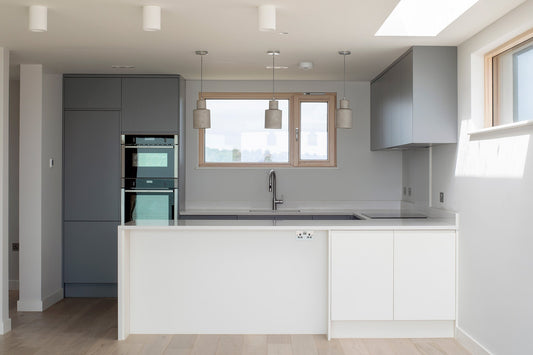
Trickle Vents & Building Regulations Part F
Understand how Part F affects ventilation and trickle vent use in your window plans.
Trickle Vents & Building Regulations Part F
Understand how Part F affects ventilation and trickle vent use in your window plans.
-
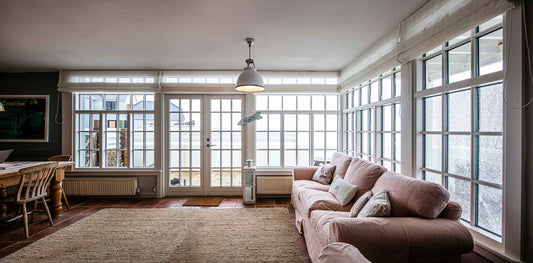
GGF Glass Defects and Guidelines
A clear guide to the GGF glass standards and what to expect from modern high-performance glazing.
GGF Glass Defects and Guidelines
A clear guide to the GGF glass standards and what to expect from modern high-performance glazing.
-
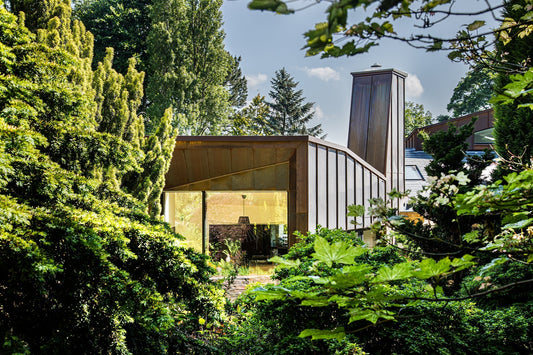
The EnerPHit Standard
Learn how the EnerPHit Standard makes passive house retrofits achievable, efficient, and future-proof.
The EnerPHit Standard
Learn how the EnerPHit Standard makes passive house retrofits achievable, efficient, and future-proof.